What happened
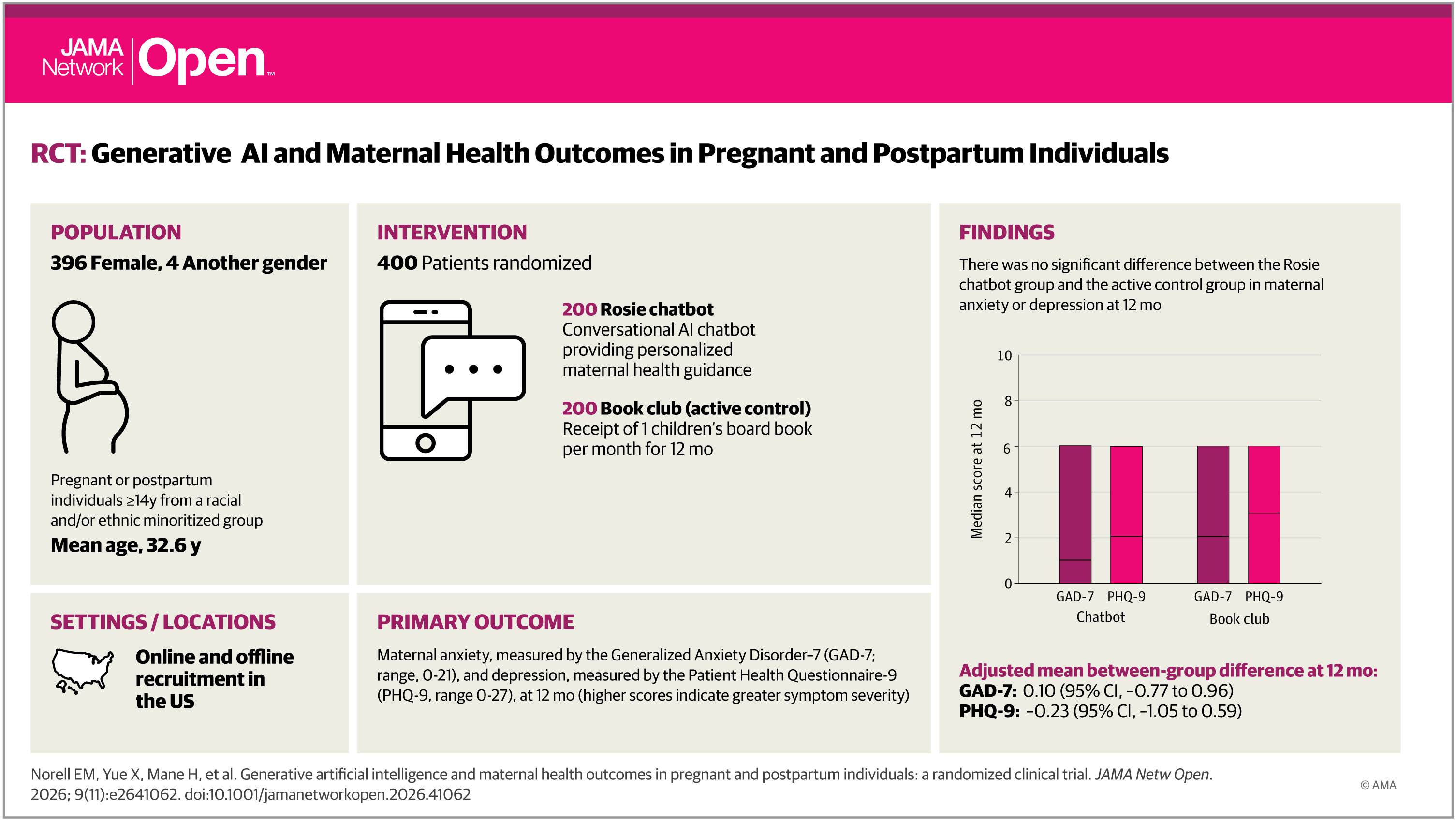
Access to a generative AI maternal-health chatbot did not improve anxiety or depression at 12 months in a US randomized trial published in JAMA Network Open.
What the trial found
Researchers assigned 400 pregnant or postpartum participants from racial and ethnic minoritized groups to the Rosie chatbot or an active control receiving monthly children’s books.
The primary anxiety and depression comparisons showed no significant differences. Emergency-department visits, postpartum checkups, contraception use and sleep duration also did not differ.
How to interpret the result
A secondary analysis found more self-reported pregnancy complications among those pregnant at enrolment, but that finding was not consistent across analyses. It should not be presented as proof that the chatbot caused harm.
The study concerns one tool, population and implementation. It does not establish that every maternal-health chatbot is ineffective. Missing data varied by outcome, and the findings do not demonstrate a substitute for clinical care.
Why it matters
InsideHer’s editorial view is that conversational access and patient engagement should be assessed alongside meaningful health outcomes. A tool can be accessible without delivering the benefit it was designed to provide.
What to watch
Independent replication, safety monitoring and evidence showing which users benefit from specific tools.